
ABSENT GALLERY
Artist
Keke Yang
Duration
VIP Preview
12.03 11am-7pm
12.04 11am-7pm
Public Hours
12.05 11am-7pm
12.06 11am-7pm12.07 11am-5pm
Venue
Guangzhou Baietan Mixc - Wallace House
© 缺席画廊及艺术家
Artists and Absent Gallery
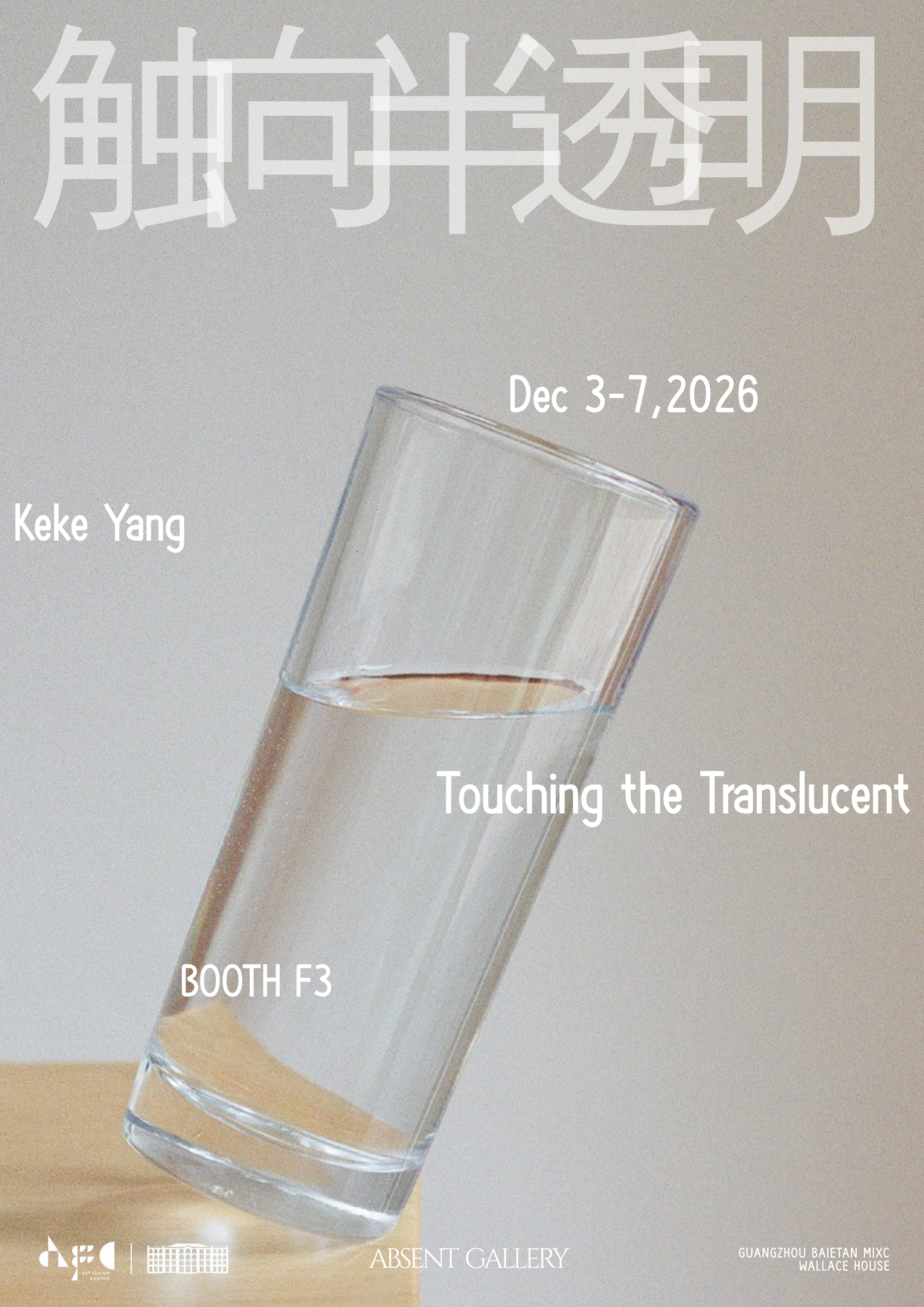
Absent Gallery is honored to present artist Keke Yang’s solo project, Touching the Translucent, in the Artist Solo Project section of AFC Art Fair from December 3 to 7, 2026.
The inaugural AFC Art Fusion Canton will meet everyone from December 3 to December 7 at Wallace House, Guangzhou Baietan Mixc. With the philosophy of "from display to collection, from viewing to participation," this year's art fair is different from the previous "cursory viewing" style of exhibition visits. Visitors can not only see the works but also step into the art scene and feel how a city blends contemporary art, historic architecture, waterfront spaces, and everyday life together. AFC Art Fusion Canton 2026 brings together 13 galleries, presenting works across multiple media including painting, sculpture, installation, and performance.
Participating Galleries:
缺席画廊 Absent Gallery
千高原艺术空间 A Thousand Plateaus Art Space
胶囊画廊 CapsuleShanghai
拾萬空间 Hunsand Space
IM Gallery
獭獭画廊 Lutra Gallery
八大画廊 PATA Gallery
PTT Space
Seedu画廊
山上艺术空间 SHaN SHaNG Art Space
TONG GALLERY+PROJECTS
谢画廊 X CONTEMPORARY ART
伊日艺术计划 YIRI ARTS
Keke Yang: Touching the Translucent
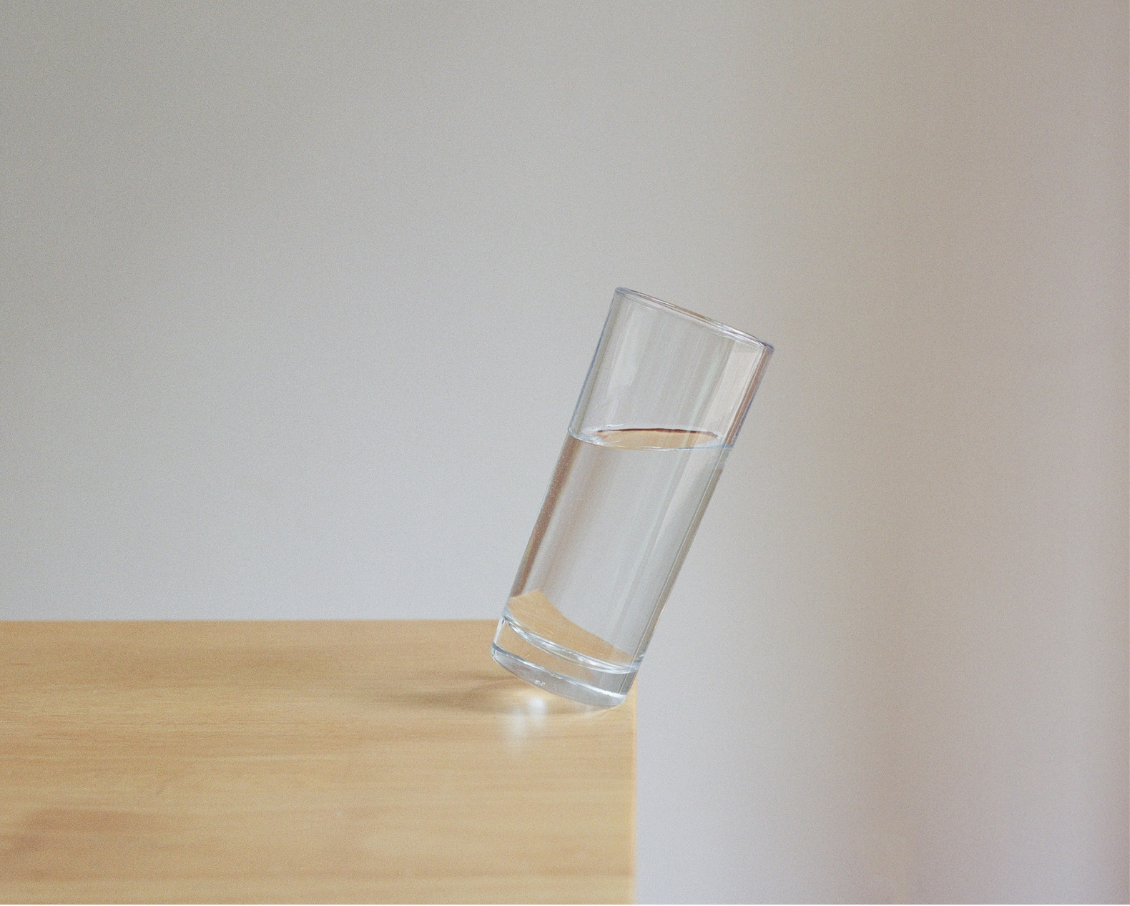
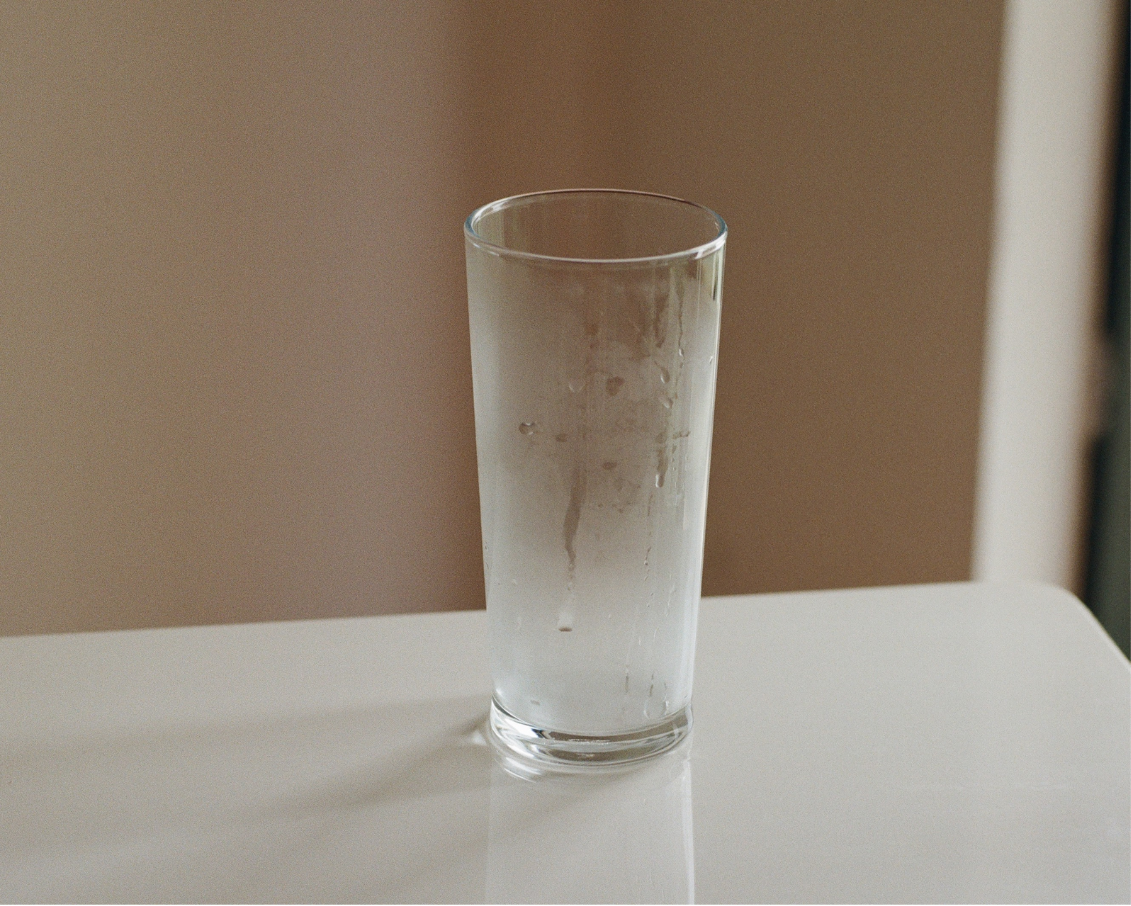
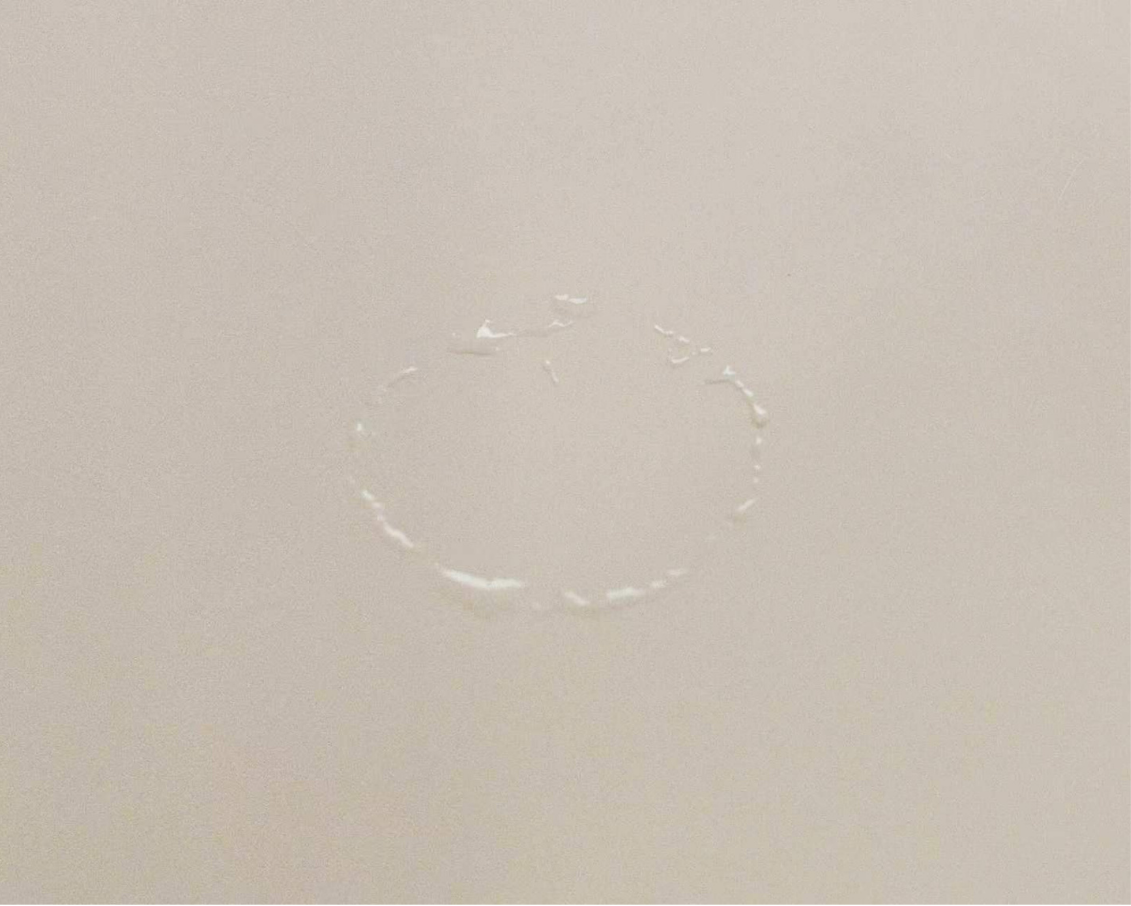
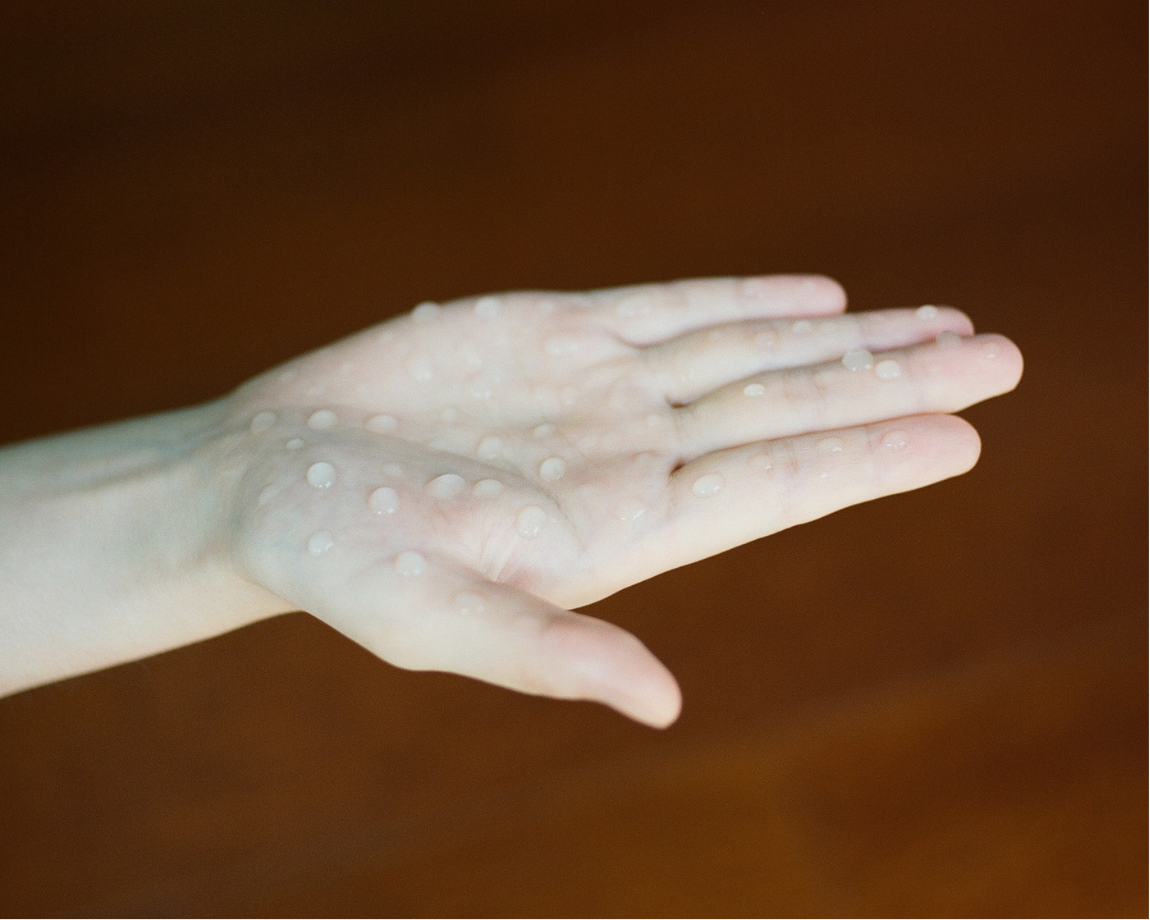
Touching the Translucent” is not an arrival at transparency, but the continuous movement of perception between the visible and the not-fully-see-through. In Yang Keke’s practice, water is “not merely a theme, but the material through which I think about transformation, instability, and modes of being.” Her work is drawn to water’s “constantly changing physical states and behaviors,” and driven by water’s “capacity to gather, dissipate, reflect, distort, evaporate, freeze, and oscillate between containment and expansion.” Glasses of water, fogged glass walls, ice, water droplets, soap bubbles, balloons, and streams thus form a set of interfaces: the glass wall becomes translucent because of temperature difference; a soap bubble pulled open by the hand covers the rim of a cup; a balloon bears pressure through its thin wall; a glass of water stops at the edge of a table; ice in the palm is melting; water drips from between the fingers; the shoulder blades become temporary terrain; a fingertip touches a stream; legs are submerged in flowing water. Perception is not yet completed, identity is not yet named, and the image is not yet closed.
“Translucency” is first of all a tactile condition. The artist interacts through water’s “surfaces, bubbles, droplets, ice, reflections, and larger bodies of water,” and incorporates materials such as balloons because they “similarly suggest tension, permeability, and constant change.” These materials prevent “fluidity” from being understood as a “fixed state” and instead as “a continuously generating process.” The cup domesticates this process: glasses with different amounts of water are devices of measurement and classification; fogged glass walls make the temperature difference between inside and outside a condition of visibility; a glass at the table’s edge is at the threshold of “about to fall but not yet falling”; a soap bubble covering the rim turns the container into a membrane “about to break but not yet broken”; and the balloon repeats tension, permeability, and fragility at another scale. The container seems to delimit a boundary, yet fog, bubble film, table edge, and thin walls keep the boundary always permeable, pressure-bearing, and breakable. Identity is likewise: it is not the thing in the cup, not an entity fixed and preserved by the container, but something continuously generated between measurement, classification, contact, and loss.
When the body enters these environments, it is not “a definitive representation of identity” but “another unstable and fragile material.” The hand holding ice endures the time of phase change; dripping water reveals the loss of support; water in the shoulder blades turns the body into terrain; a hand touching a stream turns contact into ripples; legs in a stream make the body an unstable material within flow. Touch is therefore not a supplement to vision, but the starting point at which identity is perceived, questioned, and negotiated. The artist closely connects water with understandings of gender and identity, focusing especially on how it “resists stable definition and exists between established categories, crossing their boundaries and beyond them.” Identity is not an object to be defined, archived, or read transparently, but a process of “continuous negotiation rather than fixation” in the encounter among body, objects, and environment. The manipulation and recontextualization of everyday materials make “the familiar slightly strange,” allowing ordinary materials and gestures to “carry new meanings and open up different ways of seeing.”
Photography here is not a bystander. The artist points out that photography “records and constructs at the same time,” and that every image is shaped by “framing, timing, selection, and context,” producing “specific interpretations rather than objective records.” Photography thus becomes a translucent membrane: it separates and connects reality and representation; it seems to preserve a moment, yet internally it remains unstable. The changes in water and the understanding of photography parallel each other—“both appear to preserve a moment, yet always depend on movement, perspective, and transformation.” The fogged glass wall, the soap bubble covering the rim of a cup, the thin wall of a balloon, and the photographic surface share the same epistemological state: visible, but not fully see-through; framed, yet unable to be completely fixed. What the exhibition concerns is precisely the tension between what the image surface carries and what remains unstable within it.
This continually developing body of work “does not seek a fixed conclusion,” but unfolds through “sustained observation, experimentation, and the discovery of new relationships among water, body, objects, and environment.” Identity is ultimately not regarded as “something that can be fully defined or contained,” but as “fluid, fragile, and continuously in the making.” Touching the Translucent is therefore an unfinished orientation: toward the fogged cup wall, the bubble film about to break but not yet broken, the cup at the table’s edge, the melting ice and dripping water, the hands and legs in the stream, and also toward that visible but not fully see-through membrane of the photographic surface. The exhibition does not attempt to make identity transparent, but allows us, in the process of touching toward translucency, to re-perceive how identity is generated, how it is seen, and how it constantly changes in the perception of others.
Selected Works
Artists
Zheng Fang
Zheng Fang(b.2000)Born in Qing Dao, based in Guangzhou
Fang Zheng received a BA in Computational Design from the University of New South Wales and an MFA from Goldsmiths, University of London. His practice centers on contemporary urban life, focusing on the relationship between urban structures and social power. He often uses high-rise buildings as symbols of power, mapping social hierarchies, employment pressure, and existential conditions. Architectural forms, interactive installations, and game elements are his ways of understanding the city—as a stage, an arena of contestation, a system, and a container. Differences and contrasts between materials form an implicit narrative: from precision to roughness, fragility to hardness, heaviness to transparency, symbolizing different urban strata and using tactile qualities, gloss, and mass as metaphors for the operation of power. Through interactivity and playfulness, Fang Zheng enables viewers to sense the tension between themselves and urban power structures, and to recognize that the city is not a neutral container but a force that continuously shapes, disciplines, and influences people. Forced movement, rational choices, passive stagnation, and unavoidable adjustments in interactive participation are precisely the results of everyday urban behaviors being shaped by spatial conditions. His practice leaves room through concise and metaphorical works for viewers to experience for themselves the oppression, absurdity, and fragility contained within.
Jianhao Lei
Jianhao Lei(b.1998)Born in Changsha, based in Beijing.
Graduated from the Affiliated High School of China Central Academy of Fine Arts (2017), China Central Academy of Fine Arts (Bachelor’s degree in 2021, Master’s degree in 2024), he explores the intricate connections between reality, fiction, materiality, and technology. His practice consistently revolves around the axis of technological system failures, constructing an ongoing dialogue between matter and technology. In his works, he frequently employs early neural network algorithms, natural minerals, plants, found objects, and even natural environments, showcasing a distinctive materiality and technological sensibility. Through experimental creative processes, Lei Jianhao continuously investigates how emerging technologies can expand the boundaries of perception and redefine the relationship between humans and the world. His works often manifest as dynamic, uncertain processes rather than singular conclusions. His pieces have been exhibited multiple times in international art institutions and spaces.
Jingyi Li
Jingyi Li (b.1999), born in Beijing, based in London
Jingyi Li is a London-based artist currently in residence at the Sarabande Foundation. She is aims to build feminist space in her work with a focus on the Asian women's story. She uses a variety of soft materials to evoke intense emotions. She aspires to communicate emotions, histor ies and experiences by unlocking the potential of atypical materials and techniques.
She received a Bachelor of Art (Crafts Arts, Fibre) from Tsinghua University , and completed her Master of Fine Arts at the Royal College of Art in the United Kingdom. Jingyi Li is currently pursuing a Ph.D. in Anthropology at Goldsmiths University, studying craft theory.
Lansha Ou
Lansha Ou(b.1998)lives and works in Chongqing, China.
Graduated from the Sichuan Fine Arts Institute as a postgraduate student in 2024. Her works focus on women's stories and create narrative works, with women's perspective as one of her main narrative languages, exploring the plight of women in a patriarchal society, mostly inspired by the plight of the family, as well as social observations from a woman's point of view. Social critique is also one of the narrative languages expressed, focusing on the revelation and critique of human nature, as well as social discipline and other issues. The creation of the work tries to downplay the sexual character of the work, and the images emphasize rationality and order, keeping the perspective of an outsider with a calm narrative, and through the calm juxtaposition of the symbols the women's issues gain a certain resonance with the viewers. The works focus on concepts, which are expressed through the selection of symbols and the juxtaposition of symbols. Symbols are mostly chosen from everyday objects, and the figurative approach, combined with the use of everyday symbols and symbols, naturally brings out the surreal and absurd nature of the images.
Nastja Säde Rönkkö
Nastja Säde Rönkkö(b.1985)born in Helsinki, Finland, lives and works in Helsinki, Finland.
Nastja Säde Rönkkö is an artist working with video, performance, installation and text. Her projects investigate the relationship between the digital era, power, humanity and the future of our planet. She is particularly fascinated with how concepts such as love, slowness or affection can be silent yet radical ways to be and act in the world. Her practice dreams about the future and explores presence through politics and poetics of emotion.
Rönkkö has exhibited and performed internationally in places such as Somerset House, London, Sydney Opera House, Sydney, SXSW, Austin, TX, Royal Academy of Arts, London, Glasgow International, FACT, Foundation for Art and Technology, Liverpool, Museum of Moving Image, New York, Kiasma Museum of Contemporary Art, Helsinki and BMoCA Boulder Museum of Contemporary Art, Boulder, CO. Recent solo exhibitions include Those Who Kept the Light, Rønnebæksholm Kunsthall, Denmark (2022) and Salt in Our Blood, in Our Sweat, In Our Tears, Beaconsfield Gallery, London (2023).
She has been artist-in-residence in Somerset House Studios, London (2018-2019), Wysing Arts Centre, Cambridge (2018) and Matadero Madrid (2016). Recent screenings include Lago Film Festival, Italy (2023), Tampere Short Film Festival, Finland (2023), Helsinki International Film Festival (2017, 2021, 2022) and Ivy Film Festival, Brown University, Providence, Rhode Island, USA (2018).
Her work has won several awards including Best Experimental Film at Hollywood Reel Independent Film Festival, Best Editing, NYC Indie Film Awards, Best Short Film and Best Director in Short Film, Marietta International Film Festival and Seeing the Bigger Picture Award, American Documentary Film Festival and Film Fund (2018). She is the 35th recipient of the Young Artist of the Year 2019 title and award in Finland and recipient of Below Zero Art Prize (2023).
Junlei Zhang
Junlei Zhang(b.1989) based in Hangzhou
Junlei Zhang (b.1989) was born in China and currently lives in Hangzhou. He graduated with a bachelor's degree in Lacquer Art from the China Academy of Art, under the tutelage of Tang Mingxiu. He also earned a master's degree from the Basic Visual Research Institute of the School of Intermedia Art at the China Academy of Art, where he studied under Zhang Peili and Geng Jianyi.
Junlei primarily employs lacquer as his main creative medium, grounding his practice in traditional lacquer craftsmanship while integrating contemporary artistic expressions. His works weave together social realities, textual symbols, and material properties, exploring the relationships between chance and certainty, memory and dissolution. They simultaneously engage in the ontological exploration of lacquer art and contemporary cultural reflection, probing the connections between material contingency and the pressing issues of our time.
