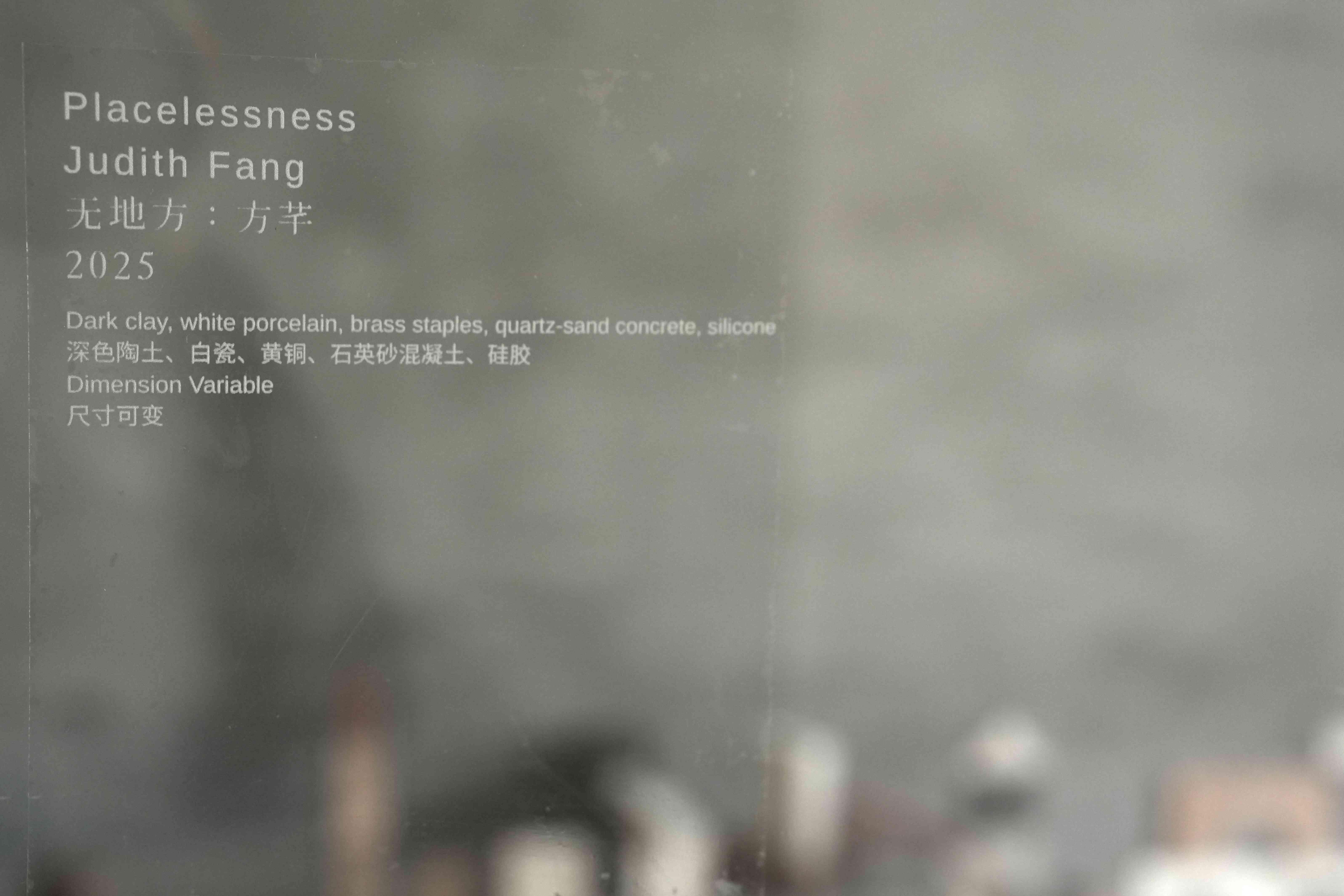

Placelessness 无地方
2025.12.26 - 2026.03.26
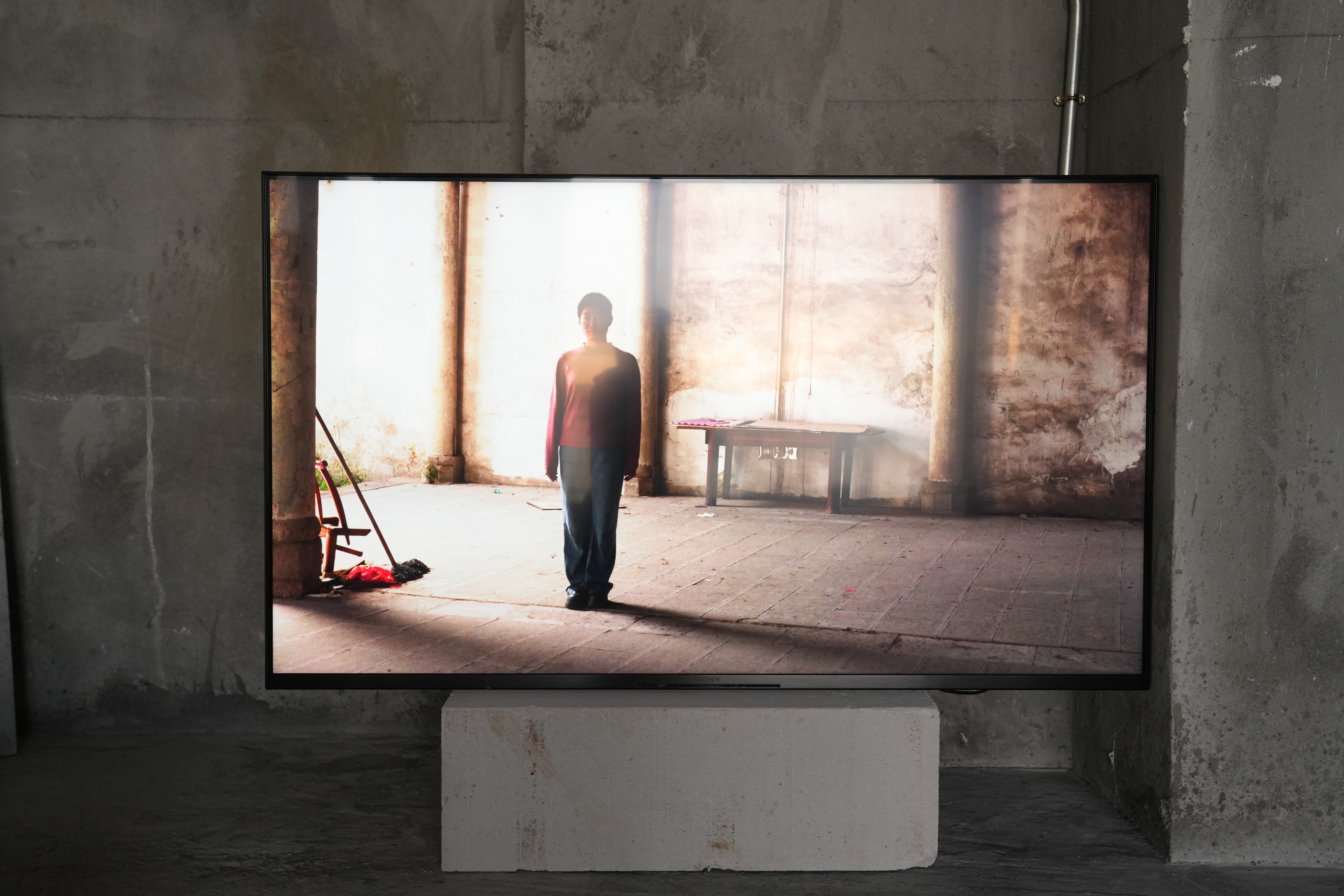
Rendering of Absence by Absent Gallery
Judith Fang
⽅ 芊 Judith Fang 出⽣于中国上海,现居景德镇与上海,是⼀位独⽴艺术家与观星爱好者。其创作交织城市记忆、天体恒常与游戏的寓⾔逻辑。成⻓于城市急速重建的千禧年,她亲历⽆数街区的消逝,并将⽬光从地⽅加速变迁下的本真性延伸⾄夜空中恒定的星⾠——在怀疑与思辨中寻找当下仍可确⽴的⻛景。
她的装置多以触觉叙事——从濒危空间采集肌理、以盲⽂描绘星图——与拼图和游戏的模块化结构相结合,邀请观众触摸、重组、探索,构建开放性的叙事空间,让记忆、游戏与意义的追索在共同体验中回荡。
她关注⼈类在地球上的共同经验,以及⾃然观察如何被纳⼊⽂明符号之⽹的过程,并
以⼈类学视⻆探讨环境、集体、语⾔与⽂化的相互塑造。她相信,科学所阐述的原理
本身,正是浪漫与诗性的质料。Judith Fang is an installation artist whose work interlaces urban memory, celestial constancy, and the allegorical logic of games. Growing up amid the city’s rapid redevelopment, she witnessed the erasure of neighbourhoods and sought permanence in the unchanging patterns of the night sky. Her site-responsive installations merge tactile narratives—casting textures from endangered spaces, mapping stars in Braille—with the modular structures of puzzles and play. By inviting
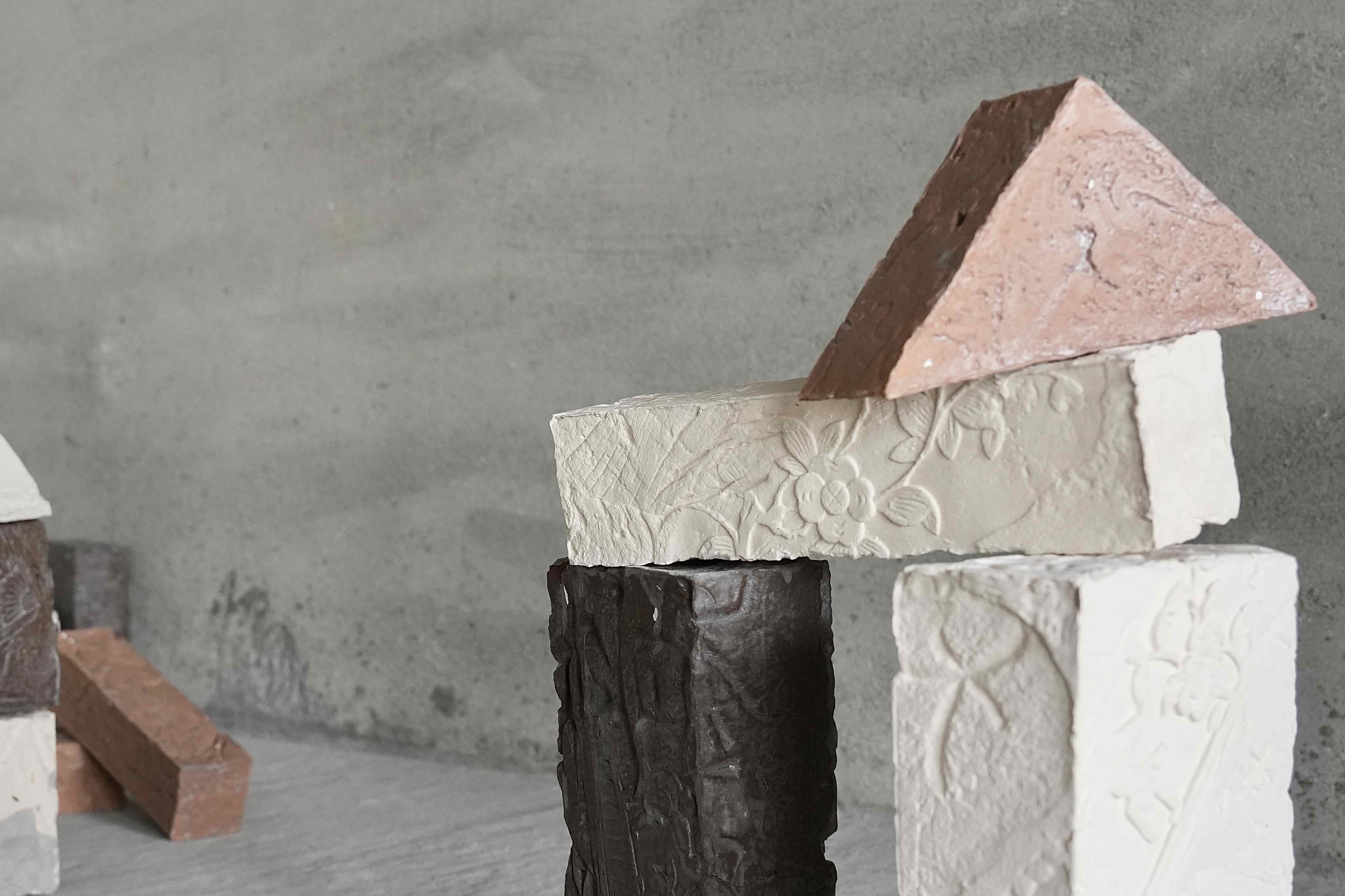
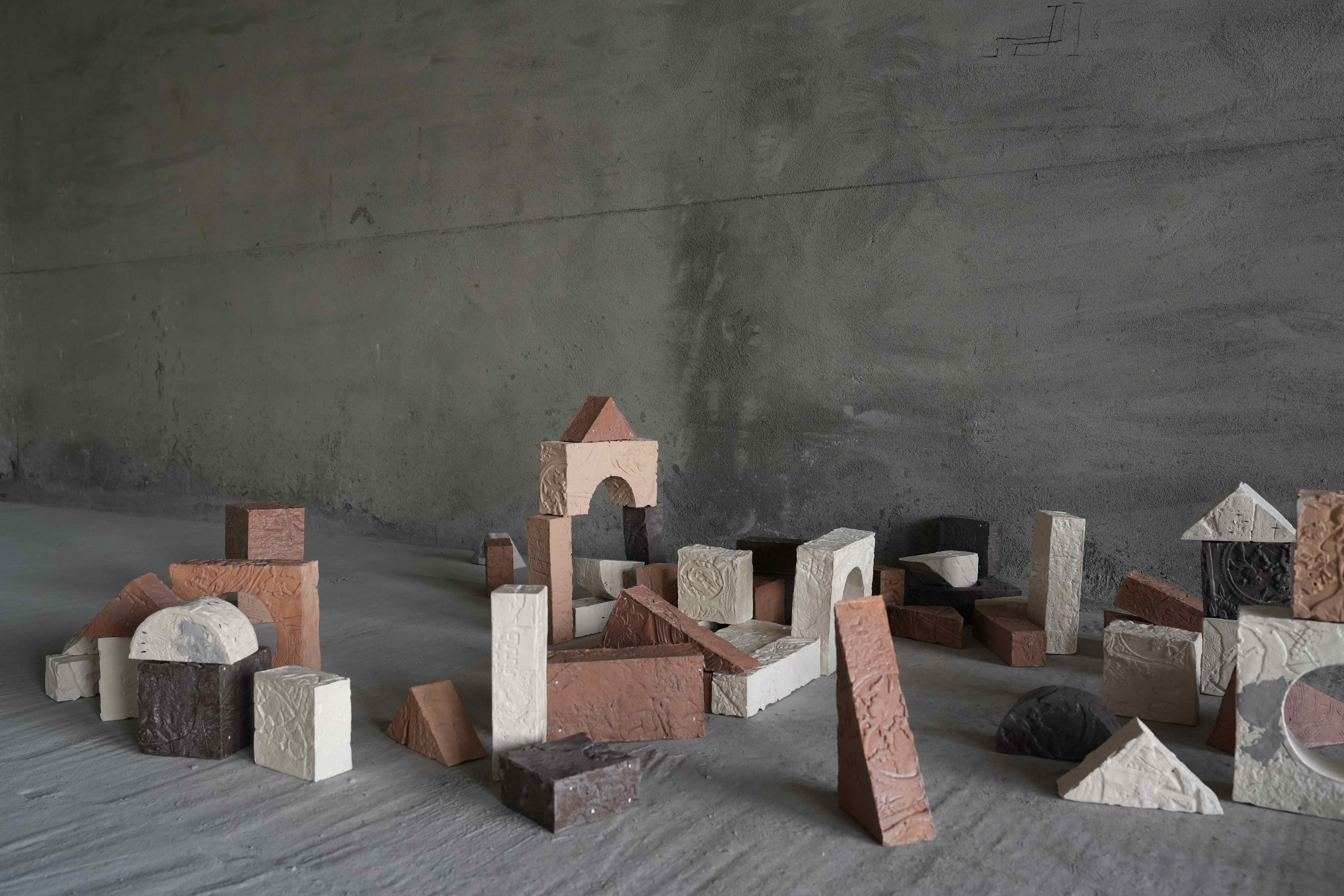
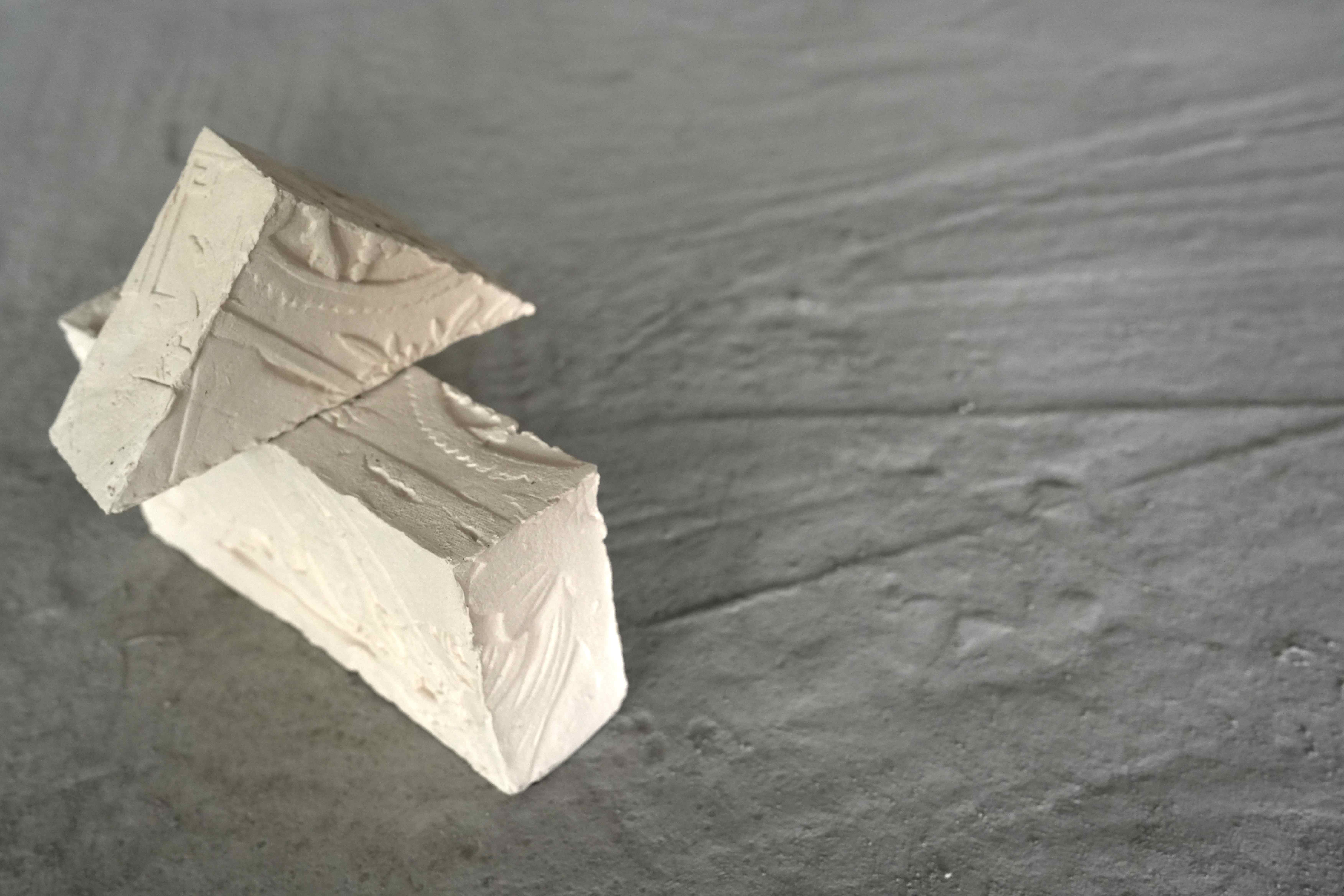
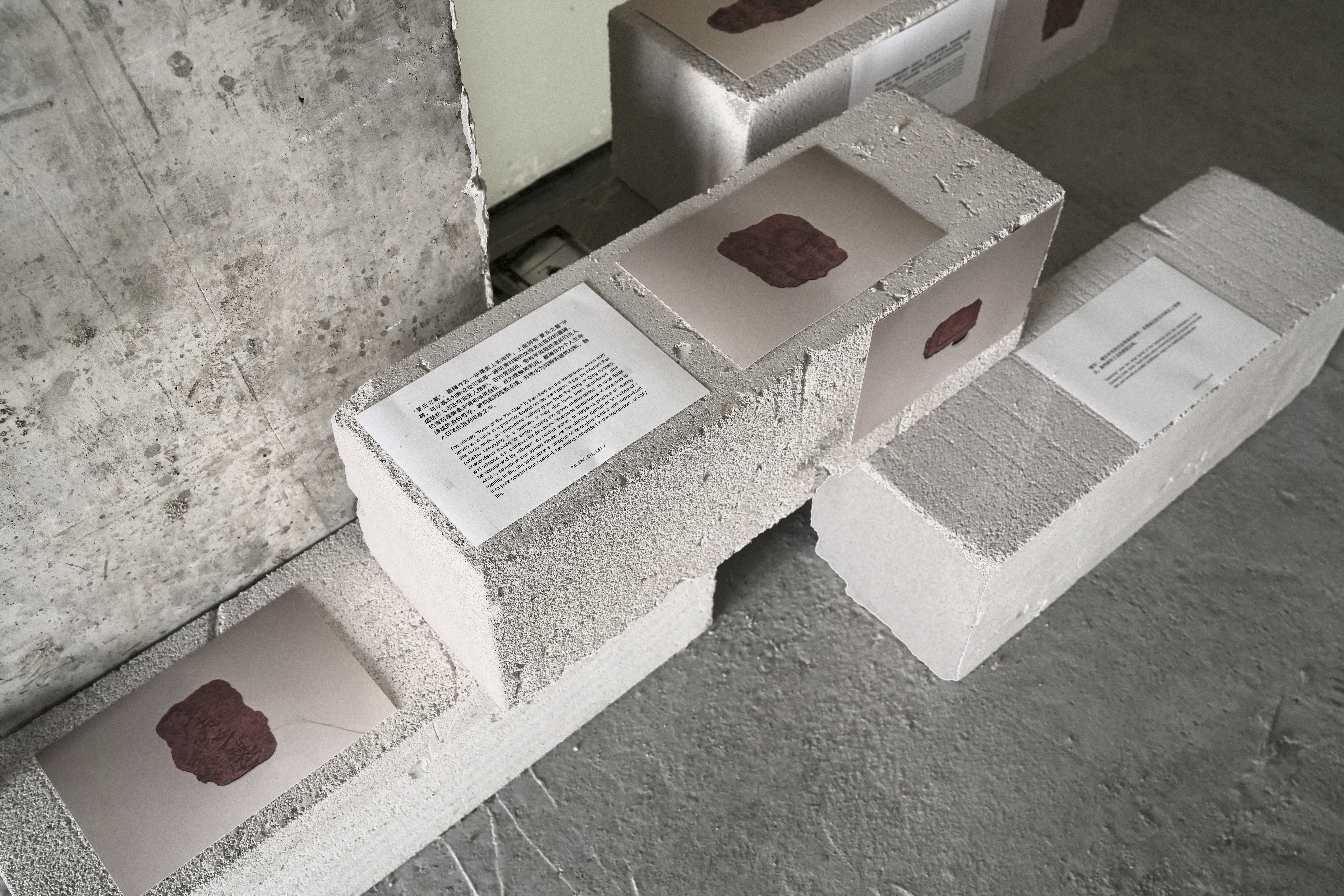
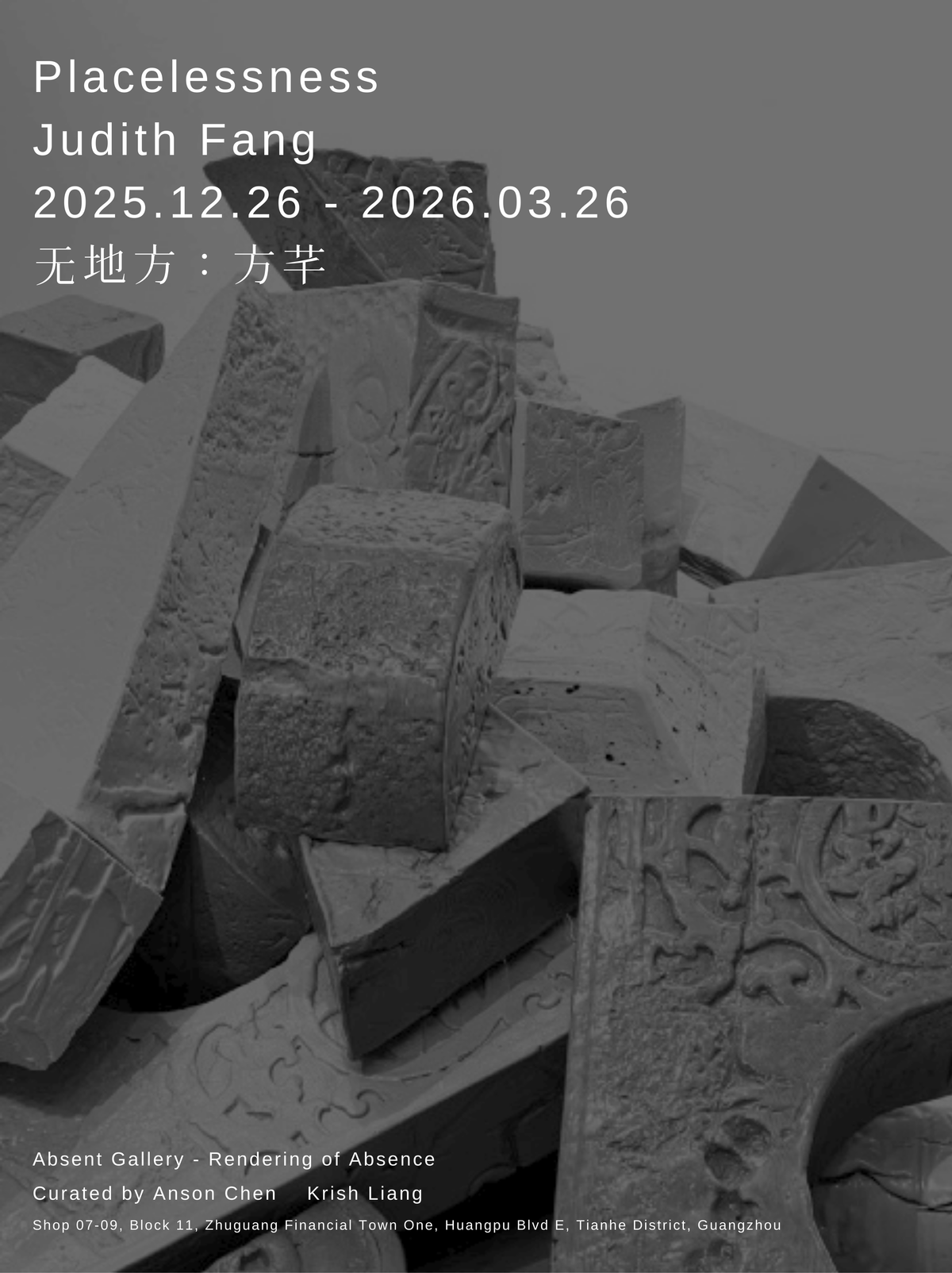
viewers to touch, rearrange, and navigate her works, Fang creates spaces where narrative is open-ended, resonating through shared acts of remembering, playing, and tracing meaning together.⽆地⽅是⼀组陶瓷积⽊装置,⽅芊与当地的⺠间考古学者通过硅胶拓印的⽅式对古建筑濒危空间及废墟进⾏系统的肌理采集、再转印于陶⼟表⾯形成模块化的“仿古积⽊”,以思考“古镇”这⼀概念在中国现代旅游语境中的模版化与娱乐化处境。“⽆地⽅”这⼀概念由⼈⽂地理学家爱德华·雷尔夫提出,指⼀种被均质化图像替代、失去具体坐标的空间状态。当今的古镇遗址⼤多⾯临修缮投⼊过⾼与商业化失败的⻛险,遗址拆除与仿古再建成为了地⽅政府的性价⽐之选。⽆机的钢筋⽔泥以⼀种现代性暴⼒覆盖均匀了⽊质榫卯与糯⽶灰浆的有机褶皱,也将真实的⽣活痕迹与历史的偏颇修正为⼀种精致的、表演性的臆想。
在废墟肌理的转印拼贴之上,这组陶瓷积⽊同时混合了⺠间陶瓷器⽫与古建筑的修复逻辑,采⽤⻩铜锔钉对破碎瓷⽚进⾏结构性缝合,⽯英砂混凝⼟及⻩铜打筋技法对缺⼝进⾏“填⾁”与加固,以模拟古建筑的修复与再造。这些携带偏远废墟记忆的仿古积⽊也在邀请观众将其作为搭建新景观的可能:当曾经繁荣的历史记忆被任意从原始空间中剥离、复制、篡改、拆解、再⽣产,观众在触摸本真性残骸的同时,重新被唤起今天同质化的古镇景观之下被现代性遮蔽的真实的时代、⽣命与在地性。Placelessness is an installation composed of modular white porcelain blocks, developed through a collaborative process of site-specifific texture mapping in rural Huizhou. Working alongside local archaeological enthusiasts, I used silicone molds to systematically capture surface imprints from the decaying architectural remains of vernacular structures. These imprints were then retranslated onto porcelain surfaces, forming a series of faux-historical building blocks. The work questions how “ancient towns” have become standardized, aestheticized templates within the broader logic of cultural tourism in contemporary China.The concept of placelessness, as introduced by human geographer Edward Relph, describes a condition in which spatial identity is eroded and replaced by homogenized visual codes. In many towns, the high cost of authentic restoration, combined with the commercial failure of preservation-based tourism, has led to a preference for demolition and facsimile reconstruction. Poured concrete and steel reinforcement become tools of architectural erasure—covering the organic irregularities of timber joinery and mortar with a seamless, inorganic fifinish. What once bore the marks of life, labor, and decay is now repackaged as a refifined, performative simulation of history.
Beyond surface transfers, the porcelain blocks are also structurally manipulated to mirror both ceramic repair traditions and vernacular restoration methods. Cracks are sutured using brass staples reminiscent of Chinese ju ci (锔瓷), while missing segments are rebuilt through quartz-sand concrete casting and internal brass reinforcements. These fragments—archaeological in texture yet synthetic in composition—invite viewers to engage in a speculative reconstruction of lost landscapes. As memories of once-vibrant places are copied, reassembled, and rebranded, what remains is not heritage, but a hollow aesthetic shell. Placelessness thus becomes both condition and critique: a material inquiry into how history is made smooth, decorative, and ultimately forgettable under the forces of modernization.Installation View 展览现场